
Timing and coordination·Phase: Whole cycle
Pull–Breathe–Kick–Glide Timing
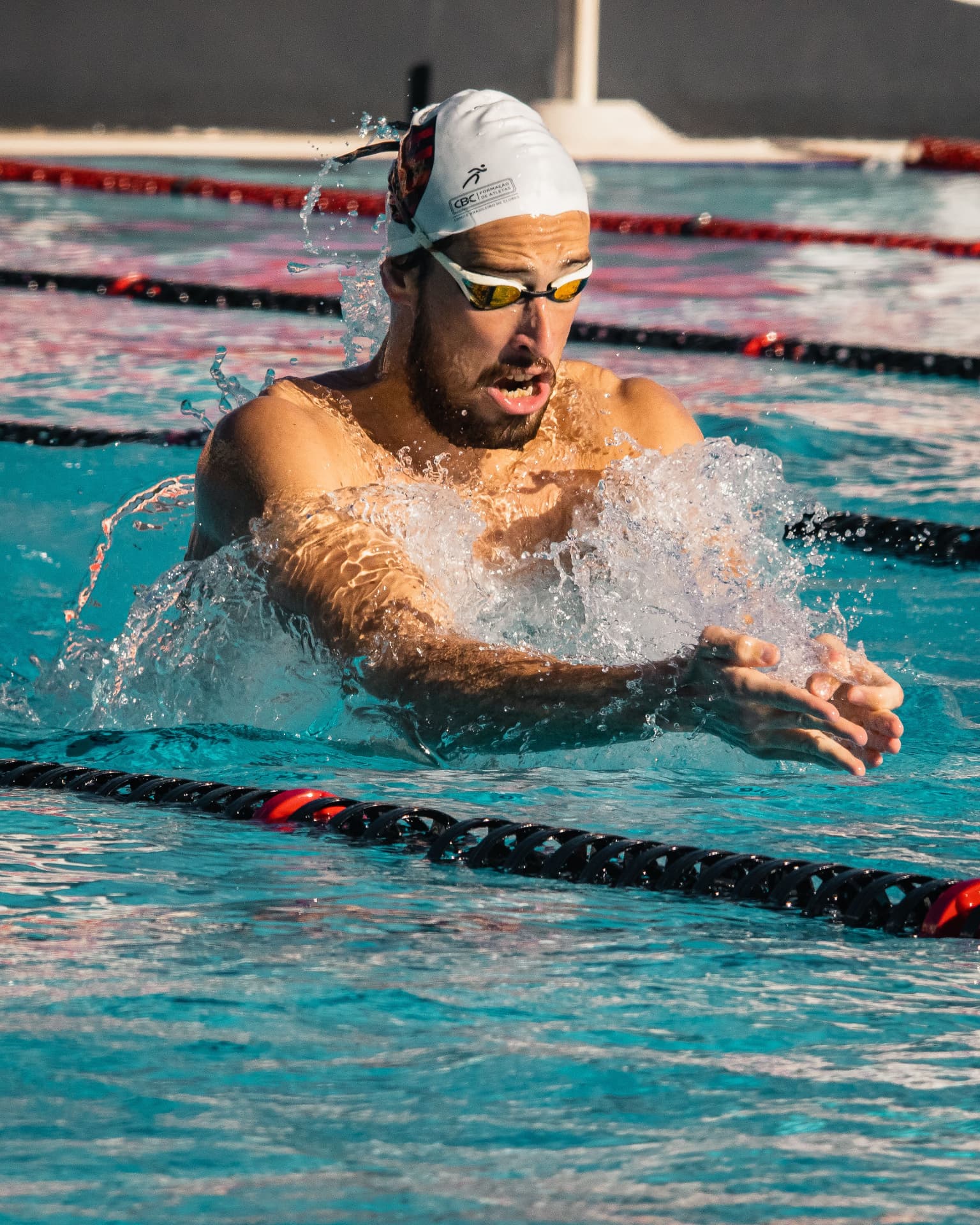
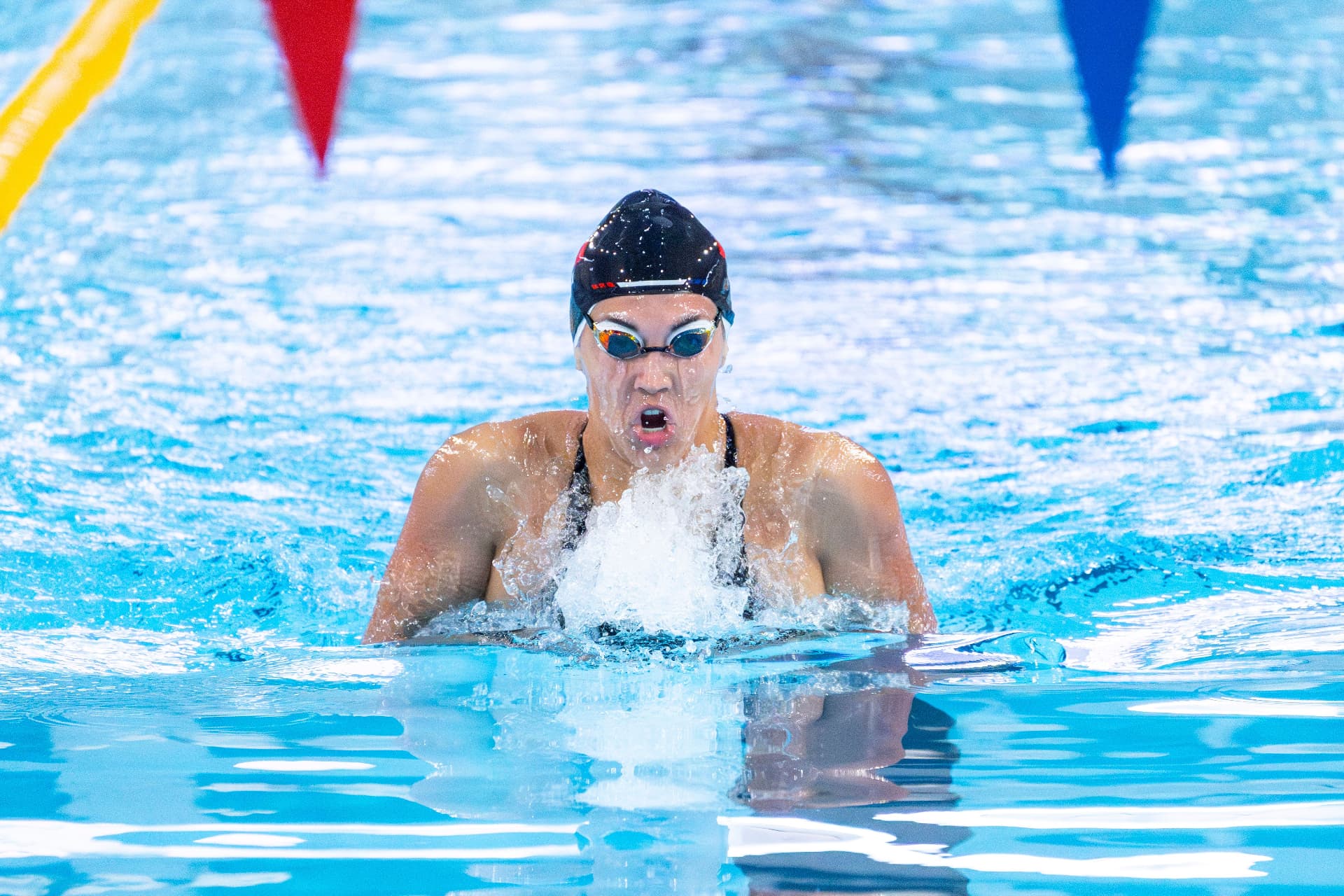
Research-supportedArms work first, the breath happens at the insweep, legs recover as arms shoot forward, and the kick drives once the arms are extended.
Biomechanical principle
Breaststroke shows the largest intra-cycle velocity variation of the four strokes; overlapping arm and leg recoveries maximises drag and speed loss.
Why it matters
Correct sequencing ensures each propulsive phase acts on a streamlined body.
Proper execution
- Pull starts from streamline
- Breathe as hands sweep in
- Heels recover as hands go forward
- Kick into a long body
Observable improvement
- Smooth surge after each kick
- No stall when the legs recover
Common mistakes & corrections
| Fault | Corrective strategy |
|---|---|
| Kicking and pulling at the same time | Two-kicks-one-pull and pull-then-kick separated drills. |
| Late arm recovery — kick into open arms | Cue 'hands first, then kick'. |
Coaching cues
“Pull, breathe, kick, glide”“Arms first, legs second”“Kick your hands forward”
Supporting references
- Maglischo EW. Swimming Fastest. Champaign, IL: Human Kinetics; 2003.
- Barbosa TM, Bragada JA, Reis VM, et al. Energetics and biomechanics as determining factors of swimming performance: updating the state of the art. Journal of Science and Medicine in Sport. 2010;13(2):262–269.