Resource Builder
Build a Resource
Choose a stroke, focus and level, pick the technical components and sections, reorder them, then save, print or export as a PDF. All content comes from the verified EST Stroke Lab library.
Preview

Complete Stroke Guide · Butterfly · Developmental
The Complete Butterfly Guide
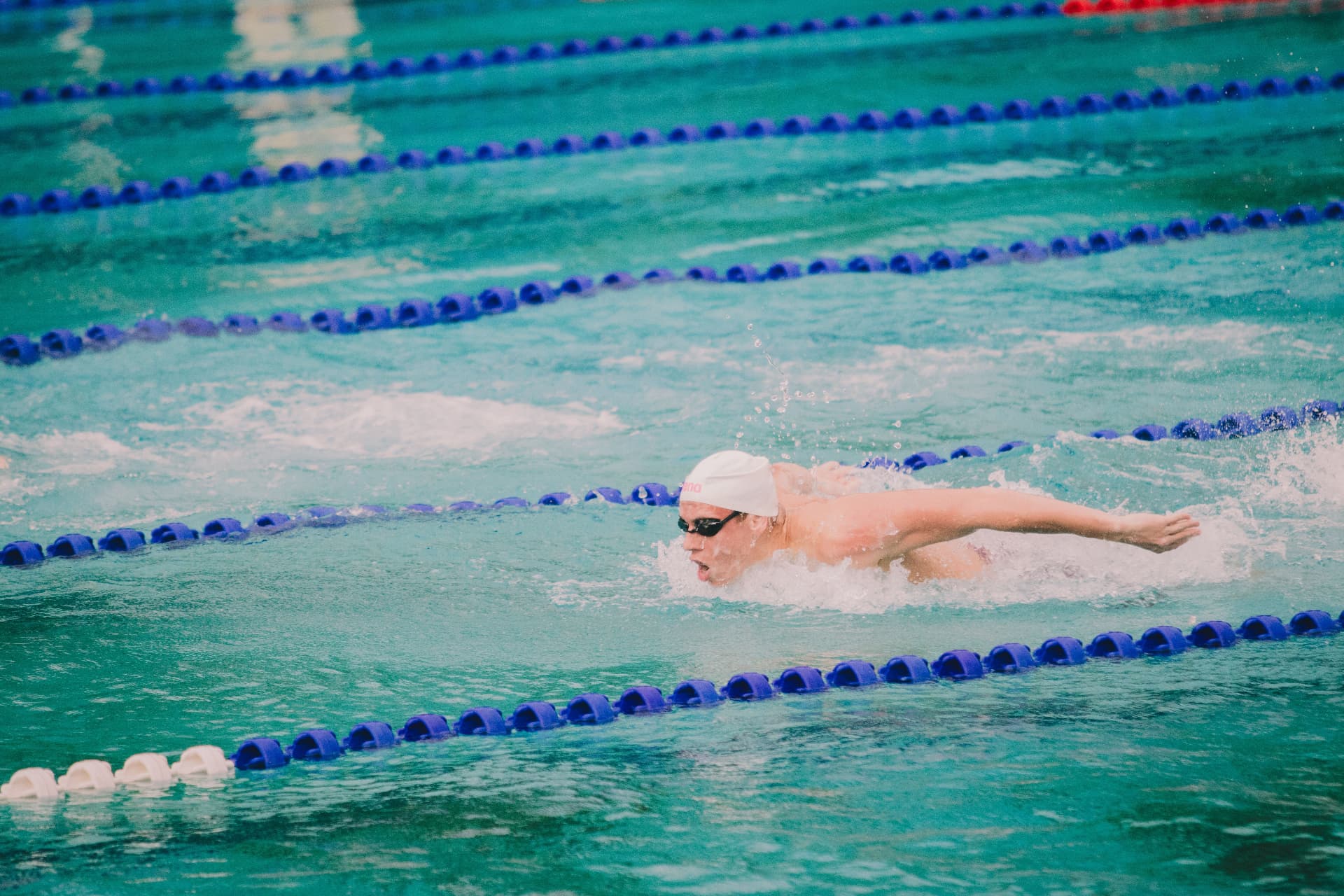
Body Undulation
Body position and alignment · Whole cycle · Coaching recommendation
Technical explanation
A wave travels from the chest through the hips to the feet. The chest presses down at entry and releases as the arms pull.
Biomechanical principles
Undulation links trunk and legs to produce the dolphin kick; amplitude that is too large increases vertical movement and drag.
Why it matters
A compact wave lets the swimmer move forward rather than up and down.
Proper execution
- Press chest gently at entry
- Hips rise near the surface
- Wave ends in the feet
- Keep head in line with the wave
Common mistakes & corrections
| Excessive diving and high hips | Reduce chest press; cue 'forward, not down'. |
| Rigid body, kick only from the knees | Body-dolphin drills without arms. |
Coaching cues
“Chest, hips, feet” · “Forward, not down”
Indicators of improvement
- ☐ Hips break the surface lightly each cycle
- ☐ Smooth, low-amplitude path
Recommended drills
Body undulation and body-dolphin drills — EST Drill Lab: drills.estperformance.app
Two-Kick Rhythm
Timing and coordination · Entry & Push · Research-supported
Technical explanation
The first kick occurs as the hands enter; the second kick drives as the hands push past the hips and exit.
Biomechanical principles
Coupling kicks with key arm phases maintains propulsion during transitions and assists the arm recovery.
Why it matters
Missing the second kick is a common cause of a struggling, low recovery.
Proper execution
- Kick as the hands enter
- Kick as the hands push out
- Legs together, ankles relaxed
- Two kicks of similar effort
Common mistakes & corrections
| Missing the second kick | Single-arm fly counting 'kick in, kick out'. |
| Big knee bend in the kick | Vertical dolphin kick with streamline. |
Coaching cues
“Kick in, kick out” · “Small fast second kick”
Indicators of improvement
- ☐ Arms clear water easily
- ☐ Even rhythm cycle to cycle
Recommended drills
Timing and single-arm butterfly drills — EST Drill Lab: drills.estperformance.app
Entry & Catch
Catch mechanics · Entry → Catch · Coaching recommendation
Technical explanation
Hands enter around shoulder width, thumbs slightly down, then the forearms set with high elbows before pressing back.
Biomechanical principles
As in freestyle, propulsion depends on presenting the hand and forearm backward; entering too narrow or too wide weakens the catch.
Why it matters
A set catch allows the pull to move the body forward rather than up.
Proper execution
- Enter shoulder width
- Brief extension forward
- Elbows high, fingertips down
- Press back under body
Common mistakes & corrections
| Hands entering together narrow | Cue 'shoulder-width tracks'. |
| Pushing down on entry | Extend forward before setting the catch. |
Coaching cues
“Shoulder width” · “Reach, then catch”
Indicators of improvement
- ☐ Less vertical bounce
- ☐ Stronger forward surge in the pull
Recommended drills
Butterfly catch drills — EST Drill Lab: drills.estperformance.app
Low, Forward Breath
Breathing mechanics · Pull → Recovery · Coaching recommendation
Technical explanation
The chin extends forward, staying near the water as the arms finish the pull; the face returns before the hands enter.
Biomechanical principles
Raising the head high increases vertical movement and drops the hips, adding drag.
Why it matters
A low breath keeps the wave forward and protects the rhythm.
Proper execution
- Chin skims the surface
- Breathe as the hands press back
- Face down before hands enter
Common mistakes & corrections
| Lifting high to breathe | Single-arm fly with a forward breath; cue 'chin on water'. |
| Late head return | Head goes down before hands, every breath. |
Coaching cues
“Chin on the water” · “Head before hands”
Indicators of improvement
- ☐ Breathing cycles look like non-breathing ones
Recommended drills
Butterfly breathing drills — EST Drill Lab: drills.estperformance.app
Relaxed Arm Recovery
Energy efficiency · Recovery · Coaching recommendation
Technical explanation
After the push, straight relaxed arms swing low and wide over the water with thumbs leading down.
Biomechanical principles
Arm recovery is non-propulsive; minimising muscular tension and height lowers energy cost.
Why it matters
Fatigue often appears first in a high, tense recovery.
Proper execution
- Exit little finger first
- Low, wide swing
- Relaxed hands
- Enter without slapping
Common mistakes & corrections
| Arms dragging through the water | Strengthen the push and second kick. |
| High, tense recovery | Cue 'throw the arms, relaxed hands'. |
Coaching cues
“Low and loose” · “Throw, don't lift”
Indicators of improvement
- ☐ Rhythm held over longer repeats
- ☐ Clean entry
Recommended drills
Butterfly recovery drills — EST Drill Lab: drills.estperformance.app
Developmental Development
Technical objectives
- Two-kick timing
- Low forward breath
Priorities
- Second kick
- Breath height
Skill progressions
- Single-arm fly
- 3-3-3 (left/right/full)
Technical benchmarks
- ☐ Rhythm held for 25 full stroke
References
- Maglischo EW. Swimming Fastest. Champaign, IL: Human Kinetics; 2003.
- GoSwim — Technique and drill education.
- USA Swimming — Technique and coaching education resources.
- U.S. Masters Swimming — Technique articles.
- Barbosa TM, Bragada JA, Reis VM, et al. Energetics and biomechanics as determining factors of swimming performance: updating the state of the art. Journal of Science and Medicine in Sport. 2010;13(2):262–269.